
Aberdeen powered one industrial revolution. Now it has the opportunity to lead another.
For more than half a century, Aberdeen and North East Scotland have occupied a unique place in the global energy economy.
Oil and gas transformed the region, bringing investment, infrastructure and highly skilled jobs on a scale few parts of the UK have experienced.
But its greatest legacy may be what came with it.
A world-class supply chain. Thousands of engineers and technicians. Ports and fabrication facilities. Universities and research centres. Subsea expertise. Offshore operating experience. And generations of businesses accustomed to solving some of the most difficult engineering challenges on the planet.
Now, as the energy system changes again, those capabilities are opening up markets far beyond oil and gas.
Offshore wind. Decommissioning. Electricity networks. Carbon capture and storage. Hydrogen. Remote operations. Artificial intelligence. Data infrastructure. Defence and autonomous systems.
Robert Gordon University has found that more than 90% of the skills held by the region’s offshore energy workforce are directly transferable to renewables and adjacent industries. And the scale of the prize is enormous.
Around £44 billion remains to be spent decommissioning UK offshore infrastructure. ScotWind developers forecast £25.5 billion of expenditure in Scotland across 16 offshore wind projects. The Scottish Cluster, centred on Acorn carbon capture and storage at St Fergus, could generate £17.7 billion in UK economic value by 2050.
Continued investment in the UK Continental Shelf could add as much as £165 billion under a more supportive policy environment.
This is not the story of one industry ending and another beginning. It is the story of one of Europe’s most sophisticated industrial clusters evolving.
"No other place in Europe matches Aberdeen and North East Scotland's depth of offshore expertise, world-class supply chain and 50 years of solving complex energy challenges. It is why Aberdeen can credibly call itself Europe's Capital of Energy Excellence."
- Maggie McGinlay, Chief Executive, ETZ Ltd
OFFSHORE WIND
AN INDUSTRIAL PRIZE WITHIN REACH
The turbines appearing around Scotland’s coastline represent much more than electricity generation.
Behind every offshore wind farm sits a huge industrial ecosystem: ports, vessels, engineering, fabrication, cables, subsea equipment, construction, inspection, maintenance and eventually decommissioning.
North East Scotland already possesses much of that capability. Thistle Wind Partners’ Bowdun project, around 27 miles off Stonehaven, illustrates what that can mean.
The proposed wind farm has an ambition for more than £1 billion of Scottish supply-chain expenditure and could support more than 700 construction jobs. Its long-term North East operations and maintenance opportunity alone is valued at around £360 million, supporting more than 100 roles.
Further north, Ocean Winds’ Caledonia Offshore Wind Farm in the Moray Firth will generate enough clean electricity to power two million homes if it secures a Contract for Difference and final investment decision. Together with Moray East and Moray West, it would take Ocean Winds’ long-term operational workforce in the region beyond 200 skilled roles.
These are real projects, requiring real infrastructure and creating real careers. But capturing the prize requires more than turbines.
Offshore wind needs grid capacity, timely consenting and viable routes to market. It needs ports capable of handling components on an unprecedented scale. And it needs a supply chain confident enough to invest.
The choice facing Scotland is therefore not between renewable energy and new infrastructure. It is whether we build both quickly enough to secure the investment.
"The choice is not renewables or the grid, but whether Scotland delivers both and secures the jobs, investment and industrial value within reach. The North East's prosperity over the next half-century depends on it."
- Kirstin Gove, Head of Communications, Bowdun Offshore Wind Farm
"Securing Scottish Government consent for Caledonia is a milestone everyone at Ocean Winds should be incredibly proud of, but we're not resting on our laurels."
- Mark Baxter, Caledonia Project Director, Ocean Winds
THE GRID
CONNECTING OPPORTUNITY
That transformation is already beginning onshore. SSEN Transmission is progressing plans for a £150 million specialist training centre at Thainstone Business Park near Inverurie.
The facility would support hundreds of trainees every year, combining classroom learning with practical experience on transformers, circuit breakers, gas-insulated switchgear, overhead line structures and cables.
It forms part of SSEN Transmission’s £29 billion programme to upgrade the electricity network across the North of Scotland, alongside a commitment to recruit 600 people into “earn as you learn” roles by 2030.
For a region navigating industrial change, this is an important development. It creates a route for experienced energy workers to transfer their skills while training another generation for careers in infrastructure that will be needed for decades.
OIL AND GAS
RETAINING THE FOUNDATIONS
None of this means the North Sea oil and gas industry suddenly becomes irrelevant. Quite the opposite.
Oil and gas activity continues to sustain many of the people, businesses and physical assets required to build the industries that follow.
Rosebank and Jackdaw demonstrate the scale involved. More than £3 billion has already been invested across the two projects. At peak construction they are expected to support 3,500 jobs, with 880 during operation and 125 apprenticeships.
Together, their anticipated contribution to the UK economy over their producing lives is £28.7 billion, with £3.8 billion in forecast tax revenues by 2034.
But they also represent something bigger. More than a dozen North Sea projects are ready to move, with investors, skills and supply-chain capacity in place.
Independent analysis suggests the North Sea could produce up to 7.5 billion barrels of oil equivalent between 2025 and 2050 under the right conditions, compared with as little as 2.6 billion if investment falls away.
How Britain manages that transition will therefore shape not only its energy security, but the industrial capability available for the transition.
"The public debate and intense media interest in Rosebank and Jackdaw reflect the importance of both projects. They matter for the energy they can provide, with billions of pounds and thousands of jobs tied to their development."
- Neil McCulloch, Chief Executive, Adura
JACKDAW AND ROSEBANK IN NUMBERS
PORT OF ABERDEEN
INVESTING IN THE NEXT 900 YEARS


Few places embody the evolution better than the Port of Aberdeen. Founded in 1136, it is the UK’s oldest existing business.
Oil and gas still accounts for around 60% of its activity. But the £420 million South Harbour expansion has transformed what the port can accommodate, supporting growth in decommissioning, freight and tourism while preparing for offshore wind.
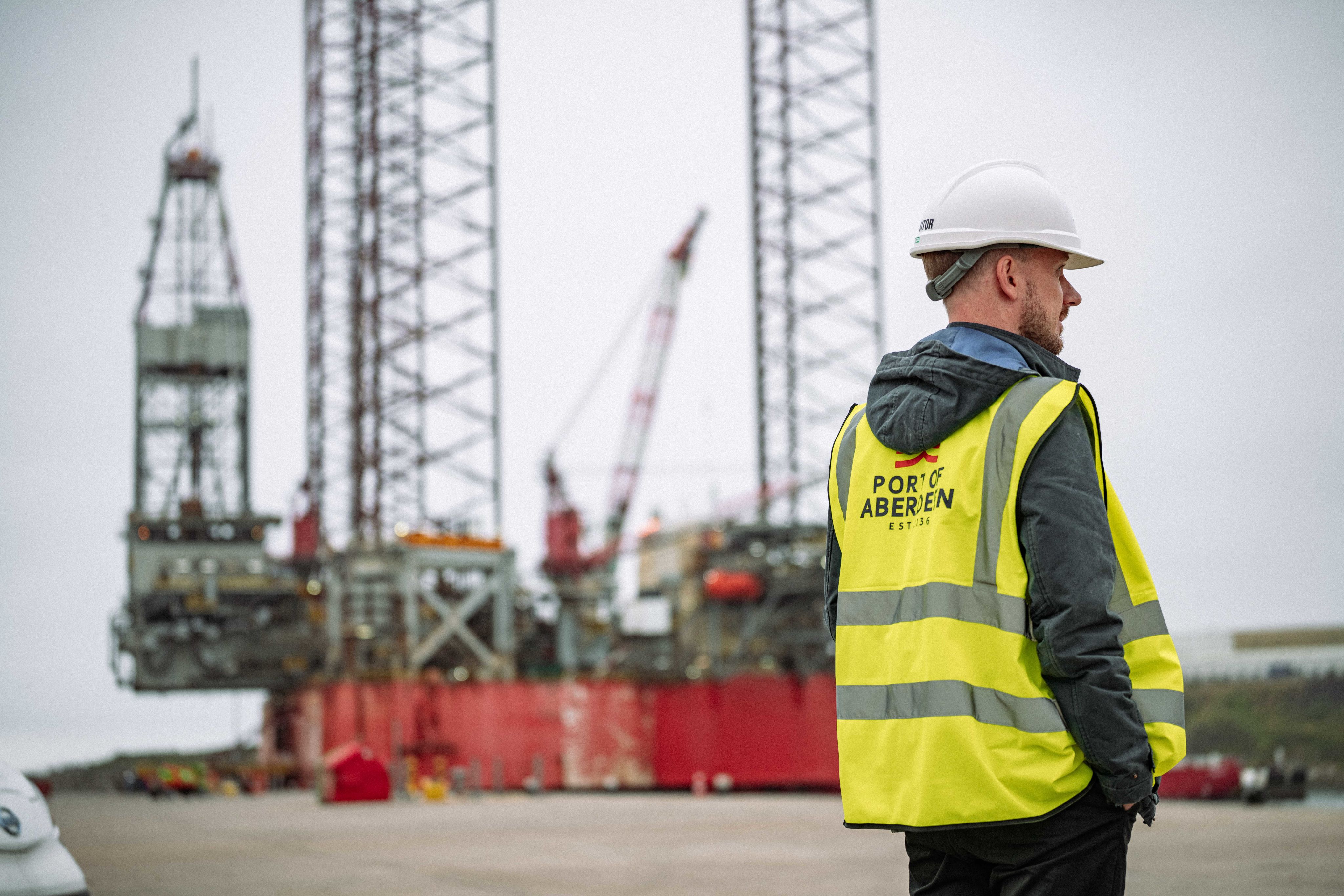
The port says that investment has made it around 90% ready to service Scotland’s floating offshore wind pipeline.
Aberdeen also sits within 150km of all future ScotWind and INTOG floating turbines, creating the potential for the city to become a major component replacement hub.
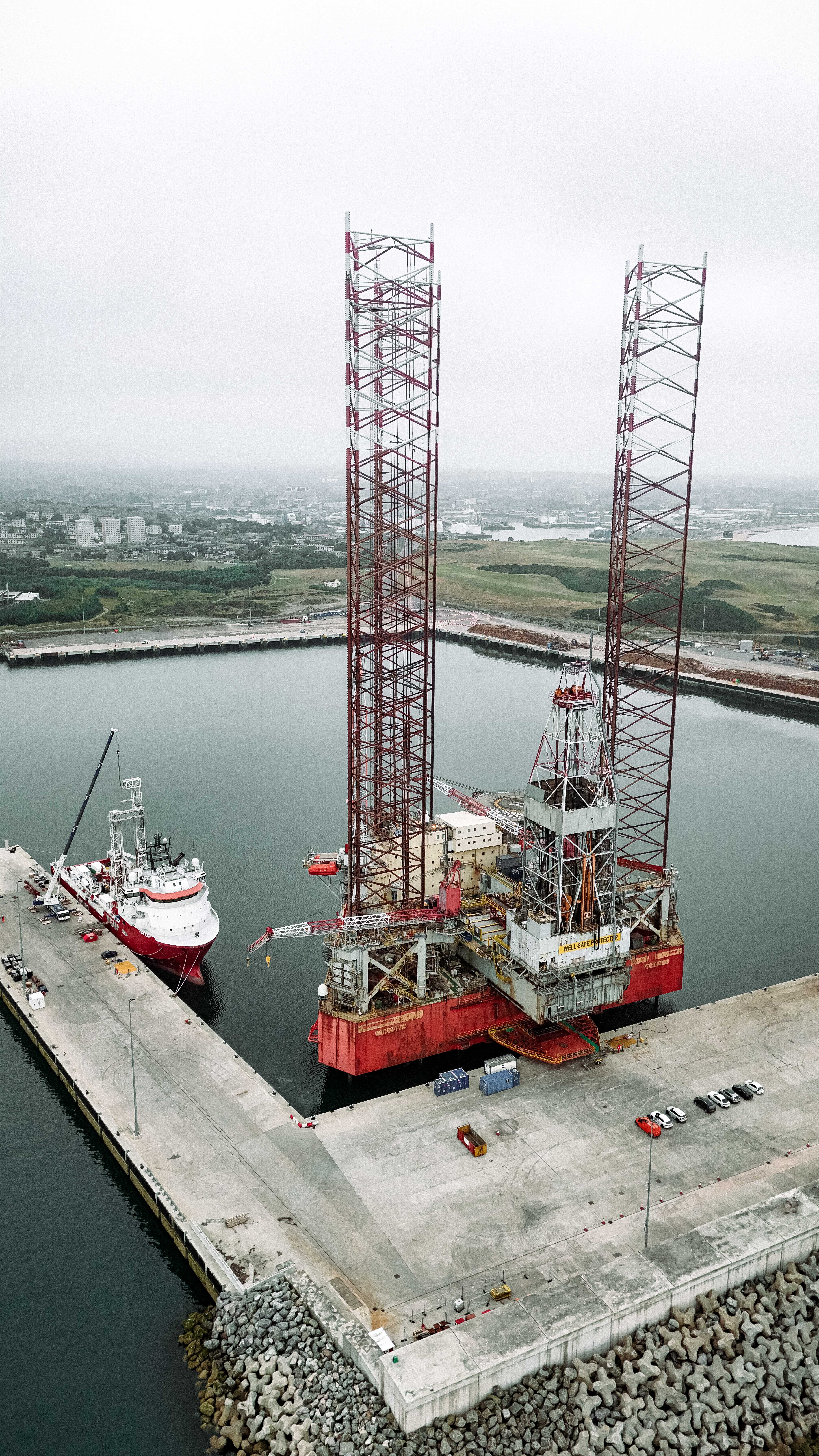
Floating turbines will periodically need to be towed into port, repaired and returned to sea. The combination of deepwater infrastructure, proximity to projects and an established offshore supply chain gives Aberdeen an opportunity to capture that work.
"At Port of Aberdeen we're setting our sights on becoming a major enabler of offshore wind, but we need oil and gas to get us there."
- Bob Sanguinetti, CEO, Port of Aberdeen
DECOMMISSIONING
A £44 BILLION MARKET
Even as new projects are developed, another enormous industry is accelerating.
The remaining UK Continental Shelf decommissioning programme is estimated at £43.4 billion.
More than 1,000 wells are forecast to be decommissioned over the next five years, alongside a backlog of around 500 awaiting final abandonment.
Aberdeen-headquartered Well-Safe Solutions shows how North Sea expertise can turn that domestic challenge into an export opportunity.
Founded in 2017, the company now employs more than 300 people and owns and operates three specialist rigs.
Its work for Apache across the Forties and Beryl fields covers more than 260 wells, while the business has established a Kuala Lumpur base and is delivering engineering work in Indonesia.
As chief operating officer Matt Jenkins puts it: “If you can do it in the North Sea, you can export it anywhere in the world.”
That principle extends well beyond decommissioning…
REMOTE OPERATIONS
LEADING THE REVOLUTION
For decades, Aberdeen exported people and equipment around the world - and increasingly, it can export expertise without those people leaving the city.
Boskalis has invested £40 million in state-of-the-art capabilities and ROV systems, centred on its Remote Operations Centre in Westhill.
Since becoming operational in April 2025, the facility has delivered more than 5,000 operational hours, including more than 600 hours of remote ROV operations.
Teams in Westhill can currently support four vessels simultaneously, with that capability expanding further.
The potential is global. Operations in the Middle East, Gulf of Mexico and Australia could increasingly be supported by expertise sitting in Aberdeen.
Flylogix offers another example.
Technology originally developed to monitor methane emissions from North Sea oil and gas assets is now being deployed into offshore renewables, with potential applications spanning critical infrastructure, search and rescue, oil-spill response, surveillance and defence.
The North Sea is becoming a test bed for technologies that can be sold around the world.
"New technology is helping offshore and onshore teams work more closely together, combining operational excellence with digital innovation to enhance subsea operations and create new career pathways across the sector."
- Stuart Cameron, Managing Director, Boskalis Subsea
"Technology developed to monitor offshore methane emissions is finding new applications across energy, emergency response and defence, but regulatory reform is needed to unlock its full potential."
- Charles Tavner, CEO, Flylogix
HYDROGEN
CONNECTING SCOTLAND'S ENERGY FUTURE
The same infrastructure that has transported natural gas across Britain could also help create another industry.
Around a quarter of the gas entering the National Transmission System currently arrives through the St Fergus Gas Terminal.
National Gas has set out plans to develop a national hydrogen network through Project Union, beginning regionally in areas including Scotland.
The project has the potential to support around 3,100 jobs and contribute £300 million annually.
The opportunity is to connect Scotland’s renewable resources with industrial demand, storing excess renewable energy as hydrogen and transporting it through infrastructure that builds on decades of gas-sector experience.
Alongside Acorn and carbon capture and storage at St Fergus, it creates another bridge between the North East’s industrial past and its future.
AI AND DATA
ENERGY BECOMES THE COMPETITIVE ADVANTAGE
Perhaps the most unexpected opportunity to arise lies onshore.
Artificial intelligence is driving extraordinary growth in global demand for computing power and data centres.
That means enormous demand for electricity. For Aberdeen, that could turn one of the challenges facing Scotland’s renewable energy system into a competitive advantage.
Ashfield Land, working with data-centre specialist TechRE, is progressing the Blackdog Data Centre & AI Campus.
At full scale, the project envisages billions of pounds of private investment alongside thousands of jobs across construction, engineering, digital services and research and development.
Its location close to planned renewable generation could make Blackdog a major local customer for offshore wind, providing projects with demand for their electricity while helping accelerate deployment.
The opportunity is not simply to generate energy. It is to use abundant energy to attract the industries that will define the next century.
WRITING THE NEXT CHAPTER
The opportunity now facing North East Scotland is difficult to overstate.
Oil and gas production. Offshore wind. Grid infrastructure. Decommissioning. Carbon storage. Hydrogen. Remote operations. AI and data. Autonomous systems. Advanced engineering.
These are not isolated sectors, they overlap.
The engineers maintaining North Sea infrastructure today can help build offshore wind tomorrow.
The ports servicing oil and gas can support floating turbines.
Gas infrastructure can support hydrogen and carbon storage.
Remote technology created for offshore platforms can monitor wind farms and critical infrastructure.
Renewable electricity can power data centres and AI.
And expertise developed solving North Sea problems can be exported to almost every offshore basin in the world.
That is why Aberdeen can credibly describe itself not simply as an oil and gas capital, or even as an energy-transition city.
It is Europe’s Capital of Energy Excellence.
The challenge is to turn that capability into investment, jobs and industries that will endure for another generation. The final word belongs to the man who did as much as anyone to shape Aberdeen’s first great energy era, and who spent his later years focused relentlessly on what should come next.
Shortly before his death in July 2026, Sir Ian Wood said:
“I remain convinced that our best days lie ahead, thanks in no small part to the determined, pioneering and entrepreneurial mindset of this region’s greatest asset: its people.”
He undoubtedly wrote a great chapter in Aberdeen’s story.
What comes next is ours to write.
Europe’s Capital of Energy Excellence was researched, written and produced by True North Advisors, bringing together voices from across the industries shaping North East Scotland’s energy future.
For more information about True North Advisors, visit truenorth.scot.
 Built with Shorthand